

If you are the underdog, you don’t need to bark louder.
If you've ever walked down the supermarket aisle looking for peanut butter, you'll know there isn't exactly a shortage of options.
Pretty much everything is covered (not IN peanut butter - that's weird), as in smooth, crunchy, premium, good for cooking, good for toast etc...
There are entire shelves dedicated to one of our favourite snack spreads, which raises an obvious question.
Why would anyone start another peanut butter brand?
And in much the same way that Nothing disrupted the category of smart phones which we explored last week here on Unpacked Lunch, if you're entering a mature category, you're probably competing against businesses with:
bigger budgets
larger teams
stronger distribution
more awareness
In other words:

Yet somehow Pip & Nut | B Corp managed to build a recognised national brand in a category most people thought was already won. So lets try and learn from them (which if you didn't know, is what we try and find out here on CAF, what these brilliant minds can teach us about Sales and Marketing).
Most Businesses Attack The Market Leader
But unlike David taking on Goliath, it's probably not going to work out well, especially if they identify the category leader and immediately decide to copy them.
Similar messaging, positioning, communication channels same audience getting a bit confused. And all of that with less money. Which is usually a terrible strategy.
Because the market leader already owns that space, and you don't want to sell on what someone doesn't do, you want to sell what you do... err do.
So 'Go on then, what did Pip & Nut do differently?'.
Well, instead of asking:
"How do we become another peanut butter company?"
They asked:
"How do we become the peanut butter company for people like us?"
That's a completely different question.
The Founder Didn't Start With A Product
Pip Murray, founder of Pip & Nut, wasn't sitting in a boardroom trying to identify a gap in the spreads category. She was running (a lot), and whilst doing that she was looking for healthier sources of energy and nutrition.
The business started from a behaviour, not a product. And that's really important in this case.
Because the strongest challenger brands often emerge from a frustration that already exists.
The founder isn't inventing demand, she saw a pain point, and started recognising it way earlier than everyone else.
What Pip & Nut Really Sells
Now, I don't know that many people that wake up truly excited about peanut butters, apart from Joe Black and Ted Lasso.

People buy what peanut butter represents, health, energy, convenience, lifestyle & Identity.
And that's where Pip & Nut became interesting.
The brand wasn't built around:
protein percentages
manufacturing processes
technical superiority
Images of runners
Instead it became part of a broader conversation around wellbeing, movement and modern lifestyles. The peanut butter became the vehicle and the lifestyle became the product.
Ahhhhh, now I see!!! This is why there is a squirrel right??!
No I don't think so.
The Community Principle
One thing challenger brands understand exceptionally well is that communities grow faster than audiences. An audience watches and a community participates.
Pip & Nut became heavily associated with:
runners
cyclists
gym-goers
health-conscious consumers
Not because they bought sponsorships everywhere but because they showed up where those communities already existed. That's a very different growth strategy.
Not to mention the sustainability and importance of B Lab UK
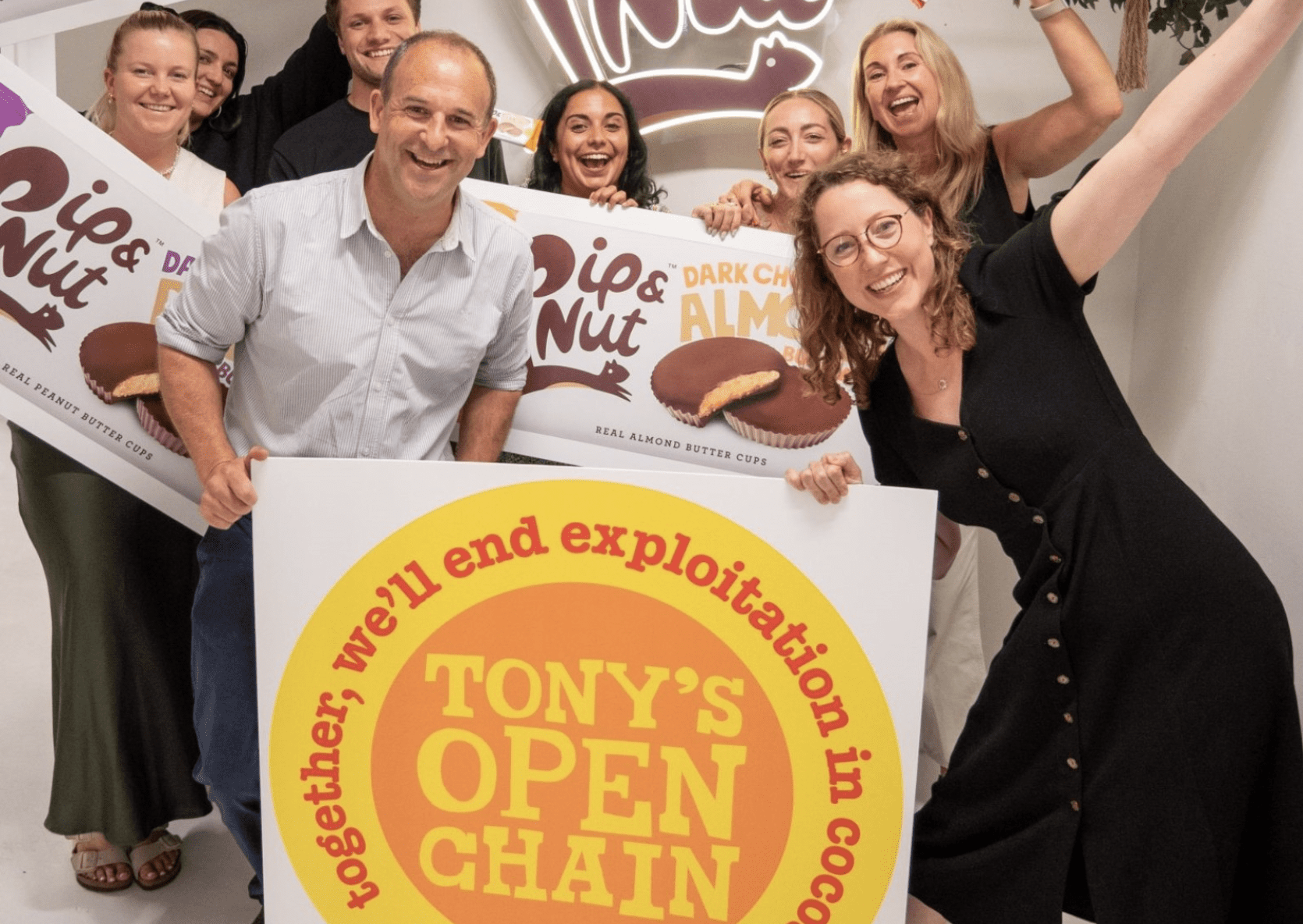
Douglas Lamont Tony’s Chocoloney CEO & Pip Murray Pip & Nut CEO & Founder
Why This Matters Commercially
Most businesses focus on awareness, but the strongest challenger brands focus on relevance and solving a customers pain.
Also awareness is VERY expensive, but relevance compounds and is the equivalent of a worthy investment.
So when a customer feels:
"This brand is for people like me."
Conversion, referrals and retention becomes soooo much easier. And customer acquisition becomes more efficient.
Which directly impacts:
✅ Customer Acquisition Cost (CPA)
✅ Conversion Rate
✅ Revenue Per Customer
✅ Customer Lifetime Value (LTV)
--
"Ah, ok so this isn't really about Peanut Butter is it?"
Bingo.
At this point you might also be thinking:
"This is all wonderful if you sell healthy snacks."
But the lesson actually applies everywhere. Let's say you are:
a fintech
an insurer
a telecoms business
a challenger bank
The question isn't:
"How do we beat the market leader?"
The question is:
"What audience feels left out by the market leader?"
Because that's actually where the growth area is, and from a sales point of view, challenger brands rarely win by being bigger. They win by being more relevant and valuable.
--
Here's some more proof...
Look at Gymshark - Sports Fashion , they didn't outspend and make a bigger noise than Nike , what they did is look at what people needed at the right time, and socials amplified that.
Monzo didn't outspend Barclays (just imagine...) what they did was, listen to what a growing amount of customers who were looking for a different financial service wanted. And they did that with a completely different personality to what was out there at the time.
Pip & Nut | B Corp are no different, they haven't out spent the major food brands. They started on the things that weren't being offered by other brands:
a community
a point of view
a clear identity
Long before they had scale, and that's what adds to the genuine tone of voice they have. They can build on that as they scale.
--
The Sales & Marketing Takeaway
Creative commercial thinking often comes from refusing to play the game that everyone else is. Most businesses see a crowded market and think:
"How do we compete?"
The strongest challenger brands ask:
"How do we become impossible to compare?"
That's a far better question, because customers don't always choose the biggest brand. They often choose the brand that feels most relevant.
--
Marinade on this
If your biggest competitor disappeared tomorrow, would your customers describe what makes you different? AND would the customers rush to all the available options or would they simply say:
"You're basically the same thing."
Because challenger brands don't win by being slightly better.
They win by being meaningfully different.
🦉 Crazy Animal Face
Creative Commercial Thinking For Leaders Responsible For Growth
